


The Gear Shed
Walking Sticks
Trekking Poles, Walking Sticks, Hiking Poles… Same Thing
Walking sticks. Trekking poles. Hiking poles. Mobility extensions. Adult ski poles without skis.
Whatever you call them, they are the same tool.
They are walking assistants.
Not because you cannot walk. But because sometimes walking would appreciate a little help.
There are two types of people in the outdoors.
Those who use trekking poles.
And those who used to make fun of them.
For years, I proudly stood in the second category.
In my mind, no able bodied adult needed trekking poles. I had two functional legs. I was not 87. I was not climbing Everest. Trekking poles were for people who wear socks with sandals, color coordinate their rain gear, and use the word trek as a verb.
Then I borrowed a pair.
Halfway down a long descent of loose rock, I was forced to confront the uncomfortable truth.
I had been completely wrong.
Not slightly wrong.
Not partially wrong.
Historically wrong.
With poles in hand, I could descend without feeling like my kneecaps were in a formal exit interview with HR, ranting that my pride had created a hostile work environment.
That was the moment I became a believer.
Why Trekking Poles Matter for Hiking and Hunting
Trekking poles turn you from a two legged creature into a four legged one.
Four legged systems generally maintain higher workplace safety standards.
I have never seen my dog mismanage a sidewalk. However, I have conducted multiple unscheduled, up close concrete surface audits using body parts that were not on the approved contact list.
Stability on Difficult Terrain
Poles add two additional points of contact with the ground. That matters:
● On scree
● In mud
● In snow
● Crossing deadfall
● Side hilling across slopes that look like they were designed to test your life insurance policy
It matters when your pack is heavy.
It matters when you are tired.
It matters when one misstep could trigger a full systems failure, a lengthy diagnostic process, and a painfully slow reboot on the way back to HQ.
Reduced Joint Impact
Trekking poles distribute load and reduce strain on knees during descents. Research shows they significantly reduce joint impact over long distances.
I did not need research.
My knees had already initiated a formal internal investigation, documented repeat violations, and escalated the matter to upper management.
Increased Endurance
Poles engage your upper body on climbs, improve posture, and create rhythm. Instead of leaving your legs to absorb the consequences of poor executive decision making, you spread the workload across your entire business.
The result is simple.
You move farther.
With less fatigue.
With fewer emergency meetings with gravity.
The Downsides of Trekking Poles
Let’s be honest.
They weigh something.
They occupy your hands.
They can get tangled in brush.
And yes, you will occasionally stab a rock loudly enough to alert wildlife in the next zip code.
No gear is perfect.
But here is the part most people miss.
Trekking Poles as Multi Use Tools
Two poles and a little imagination replace other gear.
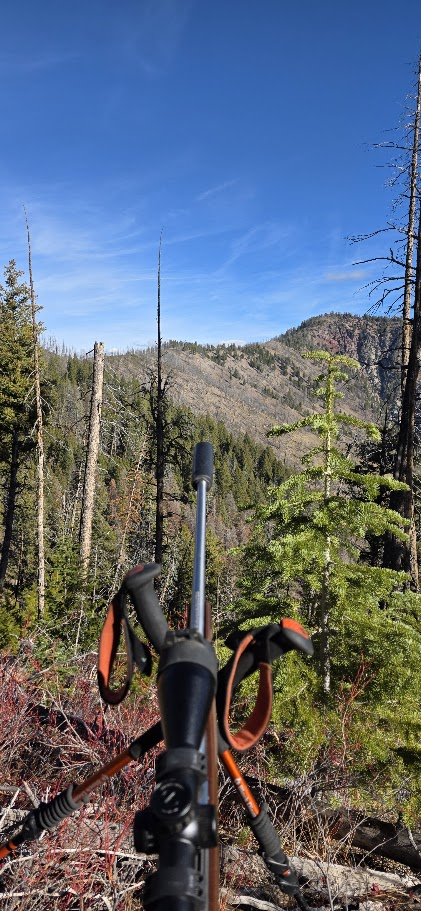
● Cross them for a shooting rest
● Brace them to steady binoculars
● Anchor tarps
● Reinforce tents in wind
● Probe snow depth
● Test stream crossings
● Check mud before stepping into something that looks shallow but is not
If your trekking poles replace a bipod or reduce your need for a tripod on certain hunts, the weight equation shifts.
A few ounces of pole may offset a pound of gear left at home.
That is not added weight.
That is strategic consolidation.
Your knees approve.
Your back approves.
Upper management approves.
Types of Trekking Poles and Walking Sticks
1. Pole Material: Aluminum vs Carbon vs Wood
Aluminum Trekking Poles
Best for durability and value.
Pros
● Strong
● Affordable
● Bend before breaking
Cons
● Heavier than carbon
● More vibration
Great for hunters or hikers who are hard on gear.
Carbon Fiber Trekking Poles
Best for lightweight performance.
Pros
● Lighter
● Absorb shock
● Feel responsive
Cons
● More expensive
● Can snap under extreme stress
Ideal for long mileage and weight conscious hikers.
Wooden Walking Staff
The Gandalf Division.
Pros
● Free if responsibly sourced
● Strong
● Timeless
● Makes you feel wiser than you are
Cons
● Not adjustable
● Heavier
● Bulkier
A hardwood staff works. It is simple and dependable.
It also doubles as a boredom management device during your union sanctioned 15 minute break at camp. A good stick naturally invites whittling.
Just do not get carried away.
There is a fine line between “adding character” and slowly transforming your primary stability tool into an oversized toothpick.
If you whittle aggressively enough, you will need to restart the entire wizard apprenticeship program.
2. Fixed vs Collapsible Trekking Poles
Fixed Length
● Strong
● Simple
● Fewer moving parts
Best for traditionalists or wooden staff enthusiasts.
Telescoping
● Adjustable for uphill and downhill
● Packs down smaller
● Uses adjustable flip or twist locks
Flip locks tend to be more reliable over time.
Z Style Folding Poles
● Extremely compact
● Lightweight
● Quick to deploy
Popular for trail runners and minimalist hikers.
3. Grip Material
Cork
● Molds to your hand
● Manages sweat well
● Comfortable long term
Foam
● Lightweight
● Soft
● Absorbs moisture
Hard Plastic
● Durable
● Typically found on poles that regret existing
Grip comfort matters. You will hold these for hours.
4. Tips and Baskets
Carbide Tips
● Bite into rock and ice
● Durable
Rubber Tips
● Quieter
● Better for pavement
Baskets
● Small for dirt and rock
● Large snow baskets prevent sinking
Choose based on terrain and season.
How to Choose the Right Trekking Poles for You
Ask yourself:
● How far do I hike?
● How heavy is my pack?
● Am I prioritizing durability or weight savings?
● Will I use them year round?
● Do I want them to double as a shooting rest?
Fit matters.
With the tip on the ground, your elbow should sit near a 90 degree angle. Adjustable poles let you shorten for climbs and lengthen for descents.
Straps are not decoration. When used properly, they transfer load to your wrists and reduce grip fatigue.
Lock mechanisms matter. Reliability beats gimmicks.
Final Thoughts on Trekking Poles
Trekking poles are not glamorous.
They are not exciting.
They are useful.
They improve balance.
Reduce joint strain.
Increase endurance.
Replace other gear.
Extend your range.
And perhaps most importantly, they dramatically reduce the number of unscheduled gravity audits you are forced to conduct each season.
I once believed no able bodied adult needed walking sticks.
Now I consider them risk management equipment.
As always, good gear is useful, not essential. It does not make or break the adventure. It just gives you fewer reasons to complain about it later.
And fewer reasons to be on a first name basis with HR.



Comments